
The Angels are Ringing: The Ironic Hell of Designing a Shimmer Reverb DSP

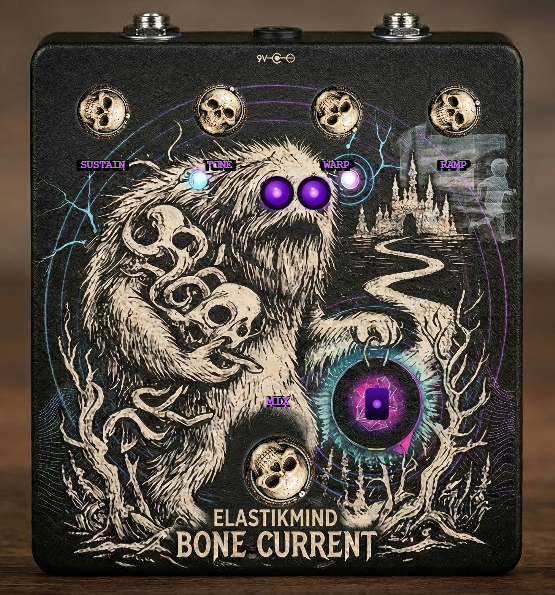
When we talk about shimmer reverb DSP (Digital Signal Processing), we are talking about creating a portal to an ethereal dimension. Anyone who’s ever made ambient music knows the basic recipe. Take a lush, expansive reverb tail, pitch it an octave up, feed it back into the reverberation tank, and voilà. It becomes the sound of a heavenly choir trapped inside an infinite, glowing cathedral. It is serene. It is peaceful.
But if you’ve ever tried to actually write the code for shimmer reverb DSP from scratch, you know the dark, miserable truth: those angels you hear are actually screaming.
From a comfortable distance, audio programming looks like elegant, academic mathematics. You imagine pristine sine waves dancing playfully on a chalkboard. In practice, writing a shimmer algorithm feels less like conducting a symphony and more like wrestling a metallic octopus covered in grease. Pitch-shifting in real-time is an inherently violent act. You are taking continuous digital audio, chopping it into microscopic grains, stretching it out, and praying the listener’s brain doesn’t notice the surgical seams.
When it goes wrong—and trust me, it always goes wrong on the first compile—the result isn’t a majestic harmonic pad. It’s a metallic, jittery, grating noise. The “heavenly choir” ends up sounding like a group of cyborgs gargling pennies inside a concrete tube.
So, you put on your hard hat and start fighting the artifacts. You crossfade the audio grains to hide the clipping. You introduce a complex spiderweb of all-pass filters and modulated delay lines to blur the harsh transients. Great, you think, I’ve smoothed it out. But now phase cancellation sneaks in, and your glorious wide stereo spread has collapsed into a muddy, hollow tin can.
You fix the tin can routing, and suddenly you realize you’ve introduced half a second of latency into the signal path. The angels are now arriving fashionably—but unacceptably—late to the session.
The deeper you dive into shimmer reverb DSP, the more you realize it is an endless game of whack-a-mole with physics. If you want a perfectly smooth pitch shift, you might turn to FFT (Fast Fourier Transform), operating mathematically in the frequency domain. But FFT brings its own nightmare: smeary, transient-destroying latency and a CPU overload that will make a conventional laptop cry. So you pivot back to the time-domain, utilizing granular pitch shifting. This saves your CPU line, but immediately re-introduces warbling, comb-filtering, and that dreaded “metallic” ring.
Then comes the feedback loop itself. Shimmer relies on feeding the pitched-up signal back into the reverb environment. Mathematically, feeding a multiplied signal back into itself is how you create an audio bomb. If you don’t rigorously filter the high frequencies inside the loop, the audio will exponentially multiply into a screeching wall of death that will blow out your studio monitors. You have to aggressively dampen the highs, carefully dialing in the modulation so the tail sounds “breathy” instead of “piercing.”
This is the ultimate, hilarious irony of digital signal processing. To produce the most organic, lush, gracefully swelling, and peaceful sounds known to humankind, you have to engage in the most unnatural, hostile, and volatile manipulation of code possible. You are essentially babysitting math that desperately wants to break. Every smooth, silky decay you hear in a modern, boutique ambient plugin is built on top of a precarious house of cards designed specifically to hide the gritty, granular reality of digital pitch manipulation.
But there is a light at the end of the tunnel. When you finally conquer the comb-filtering, tame the aliasing, and tune the feedback network just perfectly… the magic finally happens.
The harsh, metallic ringing dissolves into a glorious, blooming halo of sound that reacts dynamically to your playing. You compile the plugin one last time. You load it into your DAW, hit a single minor chord on your synthesizer, and listen as it blooms into a majestic, endless wash of pure harmony. You sit back in your studio chair, exhausted, drained, but ultimately victorious over the math.
And then, inevitably, a producer downloads your pristine, meticulously built, artifact-free shimmer reverb DSP tool—and immediately routes it through an aggressive bitcrusher to make it sound “lo-fi” anyway.
Perfect.